1. Lock the exact design version
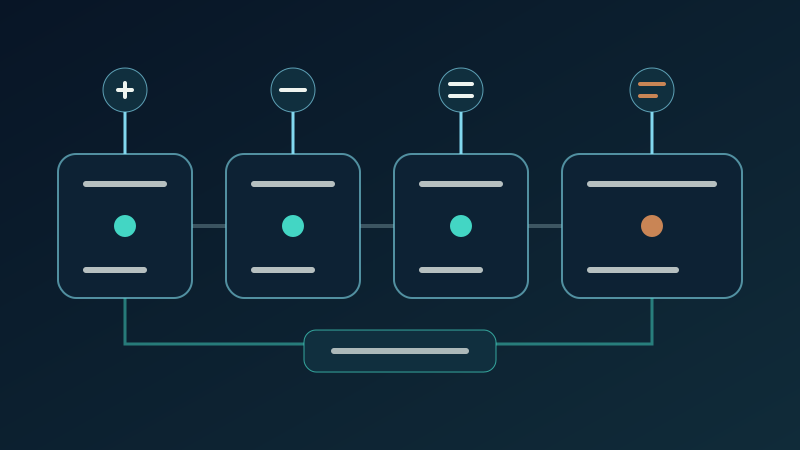
Record the composition, process and cell assumptions as one version and bind them to a SHA-256 before evidence review begins.
NexyCell keeps each design version together with its paper and patent evidence, claim-element mapping and measured test results. When the design changes, it shows which analyses, claim reviews and approvals must be redone. Run it hosted or entirely inside your network.
Record the composition, process and cell assumptions as one version and bind them to a SHA-256 before evidence review begins.
Keep the paper and patent source, checked time, scope and exact snapshot together so later changes can be detected.
Separate what is present, absent or uncertain in the exact design without presenting software output as a legal opinion.
Describe which feature changes, why it may reduce overlap and which engineering trade-offs must be validated.
Bind measured cell results, quality flags and reviewer approval to the same design version; simulation alone cannot pass this gate.
Release only after the technical and IP gates pass, with the evidence history and exact decision hash preserved.
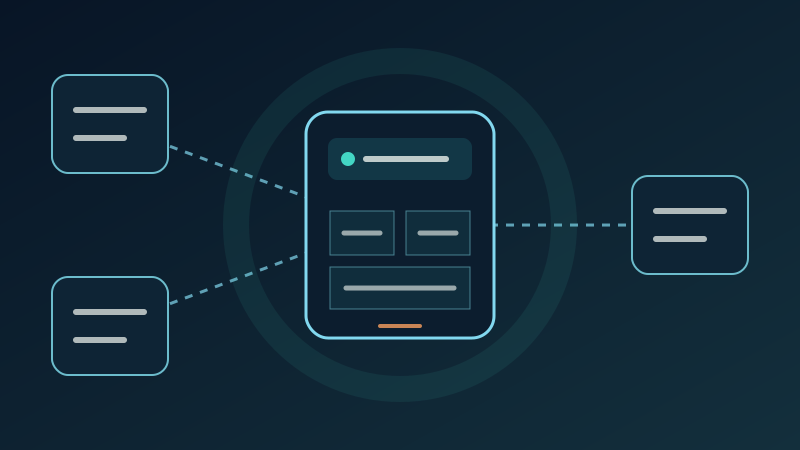
If the design changesv18 makes 3 analyses, 2 claim mappings and 1 decision require review.
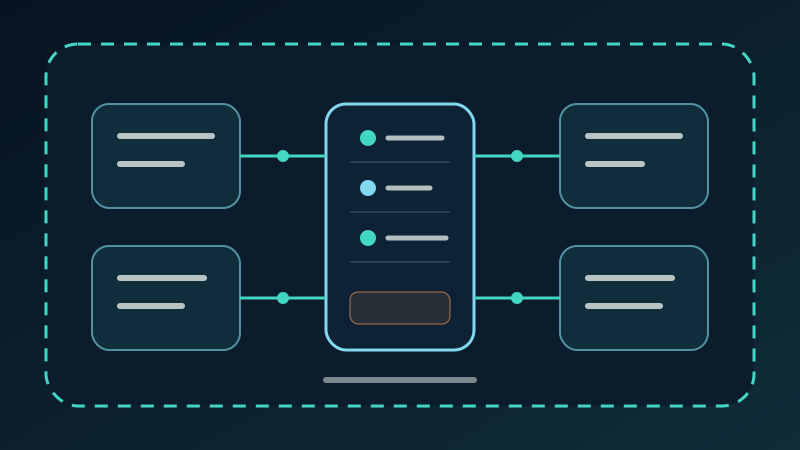
Open the public walkthrough ↓Cyclers, LIMS/ELN, simulation and licensed patent/science services remain systems of source. Bring only approved snapshots and identifiers across the boundary.
Bind the exact design hash to evidence, claim elements, feature-changing alternatives, physical validation and independent technical/IP review.
Produce a review history, source snapshots, staleness state, validation gates and a hash-verifiable release manifest.
Battery R&D and IP product engineering —
Start where traceability, confidentiality or release accountability is already slowing the work.
Replace folder-and-spreadsheet handoffs with a reproducible experiment, dataset and analysis chain.
See the validation workflow →Keep source and normalized files on customer-managed infrastructure with local identities, storage and audit.
Enforce creator-reviewer separation and release only an approved, hash-bound report.
Review the control model →Planning estimate only. No efficiency or ROI claim is valid until the customer reproduces both the baseline and measured result on the named fixture.
Customer-local Docker deployment for confidential designs, evidence, validation data, local accounts, independent review, audit and offline bundles.
Contract-specific paid pilot for 4–6 weeks, invoiced by bank transfer. Annual plans are offered only after a successful pilot.
Select one design question, evidence scope, reviewer roles, physical success criteria and customer acceptance plan.
We will check the evidence boundary, design baseline, reviewer roles, physical gate and measurable pilot outcome before asking for sensitive data.
Define what line, chemistry and process route the result represents before tuning variables.
Public inputs produce screening estimates. Production decisions require customer data, calibration, physical validation and independent approval.
Change one process group at a time; the screening result recalculates immediately.
Read the interval, bottleneck and stage losses together—not the headline yield alone.
stage loss · bottleneck · cost
First search for feasible conditions, then use sensitivity to understand which variables deserve experiments.
yield · cost · energy · constraints
local effects · interactions · process windows
Validation grade, uncertainty and change impact determine what this result may support next.
customer-approved → licensed evidence → theory
measurement · process · residual · data · extrapolation · domain
baseline · affected outputs · required evidence
Review model evidence and IP signals for the current design in one run.
| Element | Mass frac | $/kg cathode | kg CO₂/kg |
|---|
English is the governing version. Last updated 2026-08-30 · Operator: Nexysys Lab · support@nexysys.com
1. Service. NexyCell provides public battery-screening and intelligence tools and, for approved organizations, a closed-beta Hosted or Private Battery R&D & IP Decision Workspace. The workspace links exact design versions, source-bounded evidence, claim-feature review, alternatives, physical-validation records and governed release decisions. It is provided by Nexysys Lab ("we").
2. Decision boundaries. NexyCell does not provide legal advice, a freedom-to-operate (FTO) opinion, a patent search of record, certification, autonomous legal conclusions or production-equipment control. AI output and source records may be incomplete or wrong and require independent technical and, where applicable, qualified legal review. Simulation output is bounded engineering screening and is not a substitute for parameter qualification or physical cell validation.
3. Access and organization licenses. Public tools may have usage limits that change. Hosted and Private workspaces require an organization agreement, order or issued license for the agreed users, deployment and term. Credentials and license keys are for the named organization only and may not be resold or provided to third parties. We may suspend compromised, fraudulent or out-of-scope access.
4. Fees. Commercial access and pilot fees are quoted in an order or contract and invoiced for payment by bank transfer. Prices are not published. Refund, renewal, service-level and acceptance terms are those in the signed order; mandatory law prevails.
5. Acceptable use. No systematic scraping, bulk redistribution or resale of the corpus; no circumvention of rate limits or license checks; no reverse engineering except where permitted by law. Exports are for your organization's internal use.
6. Data and attribution. The platform software and its analytics are ours. Underlying records remain subject to their sources' terms: Google Patents Public Data (CC BY 4.0, Google/IFI CLAIMS), Crossref metadata, OpenAlex (CC0), and public NIA research datasets. Patent and paper records are provided "as available" and may lag official registers.
7. Beta, warranty and liability. Closed-beta features may change and are not approved for an organization's production release process unless the signed order says otherwise. The service is provided "as is" without warranties of accuracy, completeness, fitness for a particular purpose or uninterrupted availability. To the maximum extent permitted by law, liability is governed by the signed order; absent one, our aggregate liability is limited to fees paid for the service in the preceding 12 months (or USD 100 for public-tool use). We are not liable for indirect, consequential or lost-profit damages, or for decisions made without the required independent review.
8. Changes, termination and data exit. We may update public tools and these terms. Material commercial changes take effect as stated in the signed order or at renewal. Export, return, retention and verified deletion of organization data follow the applicable deployment and signed order. Sections 2, 6 and 7 survive termination.
9. Governing law. These terms are governed by the laws of the Republic of Korea. Disputes shall be resolved by the competent courts of Seoul, unless otherwise agreed in a signed contract.
1. What we collect. We collect contact details, license activation and usage events, and security logs needed to operate the selected deployment. A Hosted workspace also stores work identity, organization membership, project metadata, saved evidence, revisions and files that users submit. A Private deployment keeps its workspace data inside the customer-controlled environment unless an administrator explicitly enables an outbound connector.
2. Device and workspace storage. Without workspace sign-in, collections, watch keywords, saved queries, recently viewed items and a license key may remain in browser localStorage. Signed-in users may explicitly save project content, immutable revisions and files to their configured workspace. Workspace content is not automatically added to a public corpus. We use no advertising or cross-site tracking cookies.
3. AI processing. Each AI-enabled surface must disclose its configured provider and data boundary. Public-tool requests may use the third-party provider disclosed at that surface. Hosted workspace tasks use approved service providers or a deterministic path and do not silently fall back to an unapproved provider. Private deployments can route tasks to customer-approved local or compatible models; external fallback is disabled by default. AI results require human review before governed release.
4. Processors and connectors. Cloudflare may provide public and Hosted deployment services. Other providers, including AI inference, email and source connectors, process data only when enabled for the relevant surface or deployment. A commercial order or deployment register identifies the approved subprocessors and outbound connectors; Private-mode administrators control their local configuration.
5. Use and retention. Contact details are used to respond to inquiries and manage pilots and contracts. For an explicitly consented Public Intelligence inquiry, we also store the selected inquiry purpose and bounded referral/campaign fields with that contact. Those campaign fields and the channel-bearing source label are removed from the lead database after 365 days by the scheduled retention job; previously collected leads are excluded from this attribution. Inquiry contact records follow the lead review and deletion process below, and no audience or cross-site tracking is performed. Hosted workspace retention, export and deletion follow the signed order and verified administrator requests, subject to security and legal-retention duties. Private workspace retention is controlled by the customer's configured storage and backup policy. Expired sessions and temporary security records are periodically removed. We do not sell personal data.
6. Your rights. To access, correct or delete your personal data, email support@nexysys.com. We respond within 30 days.